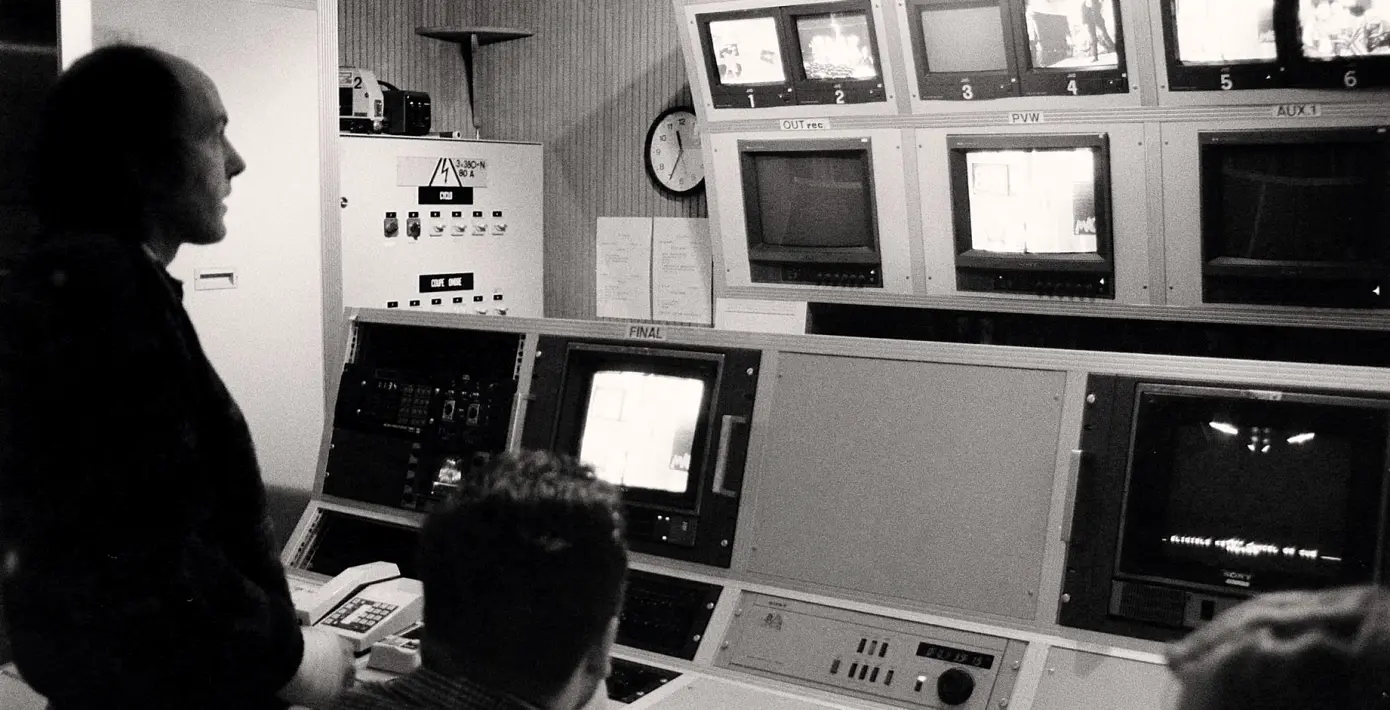
What Live Broadcast Direction Costs and What Moves the Price
A plain account of how we price a technical director and gallery lead for a live show, and which parts of the booking raise or lower the final quote.
What you are actually paying for
When a producer asks what live broadcast direction costs, the honest first answer is that the fee buys a person, not a piece of equipment. A technical director leads the gallery team and keeps cameras, graphics and audio cues in step from rehearsal to transmission. That means reading the script, briefing every operator, solving problems as they appear and staying calm when a feed drops two minutes before going live.
Most of the value sits in the hours before the show. A director who has walked the running order, agreed cue words with the vision mixer and checked the comms routing will spend transmission watching the picture rather than hunting for faults. We price that preparation openly, because shows that skip it tend to cost more on the night.
Our rates are set per booking and confirmed in writing before any work starts. The full figures are on the prices page; this article explains the reasoning behind them so a quotation never feels like a surprise.
- Pre-production reading of script and running order
- Rehearsal attendance and cue briefing
- Leading the gallery through transmission
- Handover notes after the show
Length of the booking
The single biggest driver is time on site. A director is normally booked by the day, and a day for us includes the preparation needed to make the transmission safe. A short studio panel recorded as live in a single afternoon is a very different commitment from a festival stage running across a weekend, even if the number of cameras is the same.
Long days matter as well as long bookings. Once a gallery has been working for a full shift, concentration becomes the limiting factor, and a second director is the sensible answer rather than stretching one person. We say so in the quotation instead of hoping the schedule holds.
Travel and overnight stays outside Salisbury and the surrounding area are listed as separate lines, so you can see them and decide whether a local alternative suits the production.
Size and complexity of the show
Camera count is the obvious measure, but it is not the whole picture. Four cameras on a seated discussion need far less direction than four cameras on a moving concert with lighting changes, playback and a live audience. What we look at is how many things must be timed against each other: graphics, replay, audio mixes, remote contributors and any hand-offs to a streaming platform.
Each added element creates more cues to rehearse and more points where something can slip. A show with a remote guest and a live graphic package needs a longer rehearsal than one with neither, and the quotation reflects that extra time.
If you are not sure how complex your running order is, send it with your enquiry. A short read-through usually tells us whether the work is straightforward or needs a larger crew.
- Number of cameras and whether any are mobile
- Live graphics and replay during transmission
- Remote guests or outside contributions
- Audio sources and any live music
Rehearsal, technical runs and changes
A rehearsal day is often the best money spent on a live production. It lets the director test cue calling, confirm camera positions and find the awkward moment in the script while there is still time to fix it. We would rather quote for a proper technical run than have you discover problems in front of an audience.
Changes also move the price. A running order that is locked a week ahead is cheaper to direct than one rewritten the night before, because late changes mean re-briefing the whole gallery and re-checking graphics and audio cues. We do not penalise reasonable adjustments, but significant rewrites after confirmation may alter the quotation, and we will tell you before that happens.
Our advice is simple: agree the structure early, keep a named person responsible for approving changes, and let the director know what is fixed and what can still move.
Crew, equipment and what is included
Direction is often booked alongside other roles from our team, such as a vision mixer, a replay operator or streaming support. Where we supply a full gallery crew, the director coordinates it, and the quotation lists each role separately so you can see how it is built up. Where your venue already has a crew, we can direct them and charge for direction alone.
Equipment is quoted according to the brief. If you have a working control room, we use it. If the space needs additions, we say what and why, rather than folding it into a single unexplained figure.
Whichever route you take, the written quotation states what is included, what is not, and what could change the total. That clarity is deliberate: a price you can read line by line is easier to compare and easier to trust.
- Direction only, working with your own crew
- Direction with our vision mixer and operators
- Direction with streaming and backup paths
- Equipment additions listed as separate lines
How to get a clear quotation
Start with an enquiry through the contact page. Tell us the date, the venue, the expected running time, the number of cameras and any graphics, replay or streaming you need. A rough running order is enough at this stage; we will ask for details if we need them.
We reply with a written quotation setting out the roles, the days, any travel and the conditions that could change the figure. Once you confirm in writing, we issue an invoice payable by bank transfer, and cancellations follow the payment and refund policy.
If the first quotation is higher than you expected, ask us which lines carry the cost. Often a shorter rehearsal, a simpler graphics package or a smaller crew brings it down without weakening the show, and we will say plainly when a saving would put transmission at risk.
The price of live direction follows a few honest factors: how long we are on site, how many things must be timed together, how much rehearsal the show needs and which roles you want us to fill. None of it is hidden, and all of it appears in a written quotation before you commit. If you are weighing up a production this season, send us the outline and we will tell you what it involves.